

Flatgrafika Presenter
Jacob Semko and Jeni Ly
Saturday, October 18th
2:00PM Lecture Theatre, Murray 299
Jacob Semko is an artist, author, and printmaker with a BFA from the University of Saskatchewan and an MFA from the University of Cincinnati. He has been on faculty at the University of Cincinnati (USA), Queens University (Ontario), Haliburton School of the Arts (Ontario), SERC in Bangor (Northern Ireland), St. Peters College (Saskatchewan) and the University of Saskatchewan. He has also taught workshops, guest lectured, and been a visiting artist in China, Northern Ireland, and the Republic of Ireland. He has participated in numerous group and solo exhibitions displaying his prints and self-produced printmaking equipment. His work has been selected for juried exhibitions, traveling shows, and permanent collections across the globe. Jacob lives in Saskatoon, Saskatchewan.
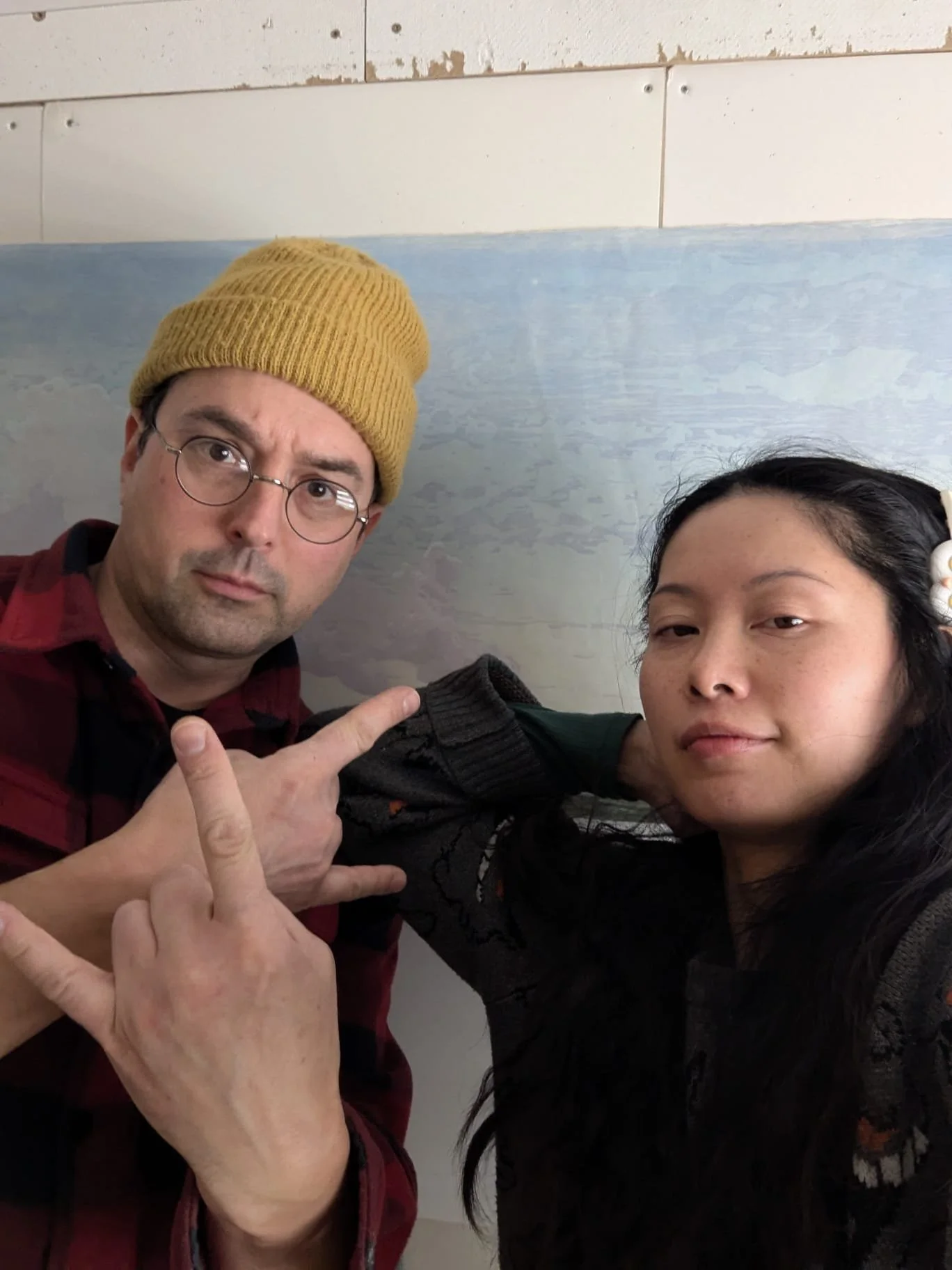
Jeni Ly is a designer, collaborator, and community artist based in Saskatoon, Saskatchewan. She believes art is a practice that transcends social boundaries and has the power to build meaningful connections through shared ideas and experiences. Jeni’s work often blends curiosity, humor, and play to draw people in and spark interaction. Past projects such as Takey Takey Claw Machine and Joy Sandwich invite strangers to come together in moments of shared joy and discovery.
Presentation Description
Collaborative interdisciplinary Contemporary Printing Making
Printmaking is a resource-intensive craft, and in today’s fast-paced world it can feel a little out of step. This quality both distinguishes printmaking and makes it vulnerable to decline.
Because the printmaking process is exacting and time-consuming, it easily lends itself to solo practice. Traditionally, however, printmaking also thrived in large collaborative studios where many people contributed to different stages of production. These large studios also informed the concepts around production and quality that would be difficult for a single practitioner to match. And unfortunately, maintaining large studios is difficult for many reasons.
So what does that mean for a small studio practice? In our studio, we embrace both the challenges and the possibilities of this moment. By focusing on the human side of printmaking—recognizing that we are creative, social beings—we approach collaboration with a spirit of openness and a “yes” attitude. This way of working has allowed us not only to sustain the practice, but to expand it, growing printmaking into new forms that reflect our own contemporary style.